What it does
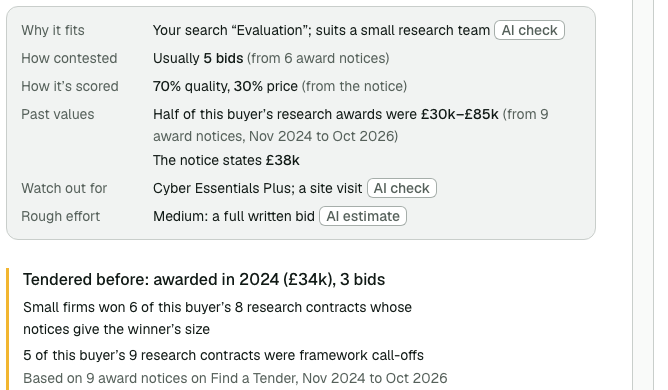
The note has up to six rows. Each row shows only when the notice or the award record has something real to say. The first, Why it fits (AI check), gives your search and a short reason. Then:
-
How contested: "Usually 5 bids", from this buyer's award notices for similar work. It shows only when at least 3 notices record the number of bids.
-
How it's scored: the quality and price split, from the notice. If the notice doesn't give the full split, it says "Not stated in the notice".
-
Past values: what this buyer paid for similar work, beside the value the notice states.
-
Watch out for (AI check): up to two things that could rule a small firm out, such as Cyber Essentials Plus or a site visit.
-
Rough effort (AI estimate): light (a quote or a short proposal), medium (a full written bid) or heavy (two stages, a presentation or many lots).
Facts come from official notices and say how many notices they rest on. AI rows always carry their tag. In the Monday email, the "Start here" pick shows the scoring, competition and past values; the full note is in Tenderhooks.
An example
Example firm. Example Research opens "Business support programme evaluation" from Example District Council. The note reads: usually 5 bids (from 6 award notices); 70% quality, 30% price; half of this buyer's research awards were £30k–£85k, and the notice states £38k; watch out for Cyber Essentials Plus and a site visit; medium effort, a full written bid. The firm doesn't hold Cyber Essentials Plus, so it checks the documents before going further.